Where we are?
During the referendum Scotland's mass movement for democracy and commonweal had a single task - to convert support for its goals to votes in a ballot box. Today the tasks of this same mass movement - the largest Scotland has seen in perhaps 400 years - are much more varied, as the fight for commonweal politics and democracy will not be won with just one vote on the horizon in the immediate future.
The YES movement is comprised mostly of people who have never been politically active before. As a result it is not overly skilled at social movement
organising. What it lacks in skill it makes up for in raw numbers.
During the peak of the YES campaign the YES movement saw 1 in 8 adult
Scots become a participant.
Keeping supporters motivated, keeping leaders participating, and connecting the immediate needs of communities suffering the effects of Westminster cuts is a strategic challenge. Connecting those struggles which emerge locally to a wider picture, informing those who made a mistake, and battling right wing propaganda and Unionism is a tactical and logistical challenge.
The danger of resignation.
One of the strategic concerns for the YES movement (continuing) is
whether it will continue to be able to command the support of 1 in 8
adult Scots in some level of participation. 1 in 50 adult Scots is now
in the SNP and 1 in 45 is now in a YES party, but this represents roughly a
third of the most politicised layer of people who participated in the
YES campaign. Many of those who have not joined a political party will
continue to be active at a local level, but there is a real concern that
absent infrastructure and institutions with short, medium and long term
goals many comrades will wonder what the point is of their continuing
participation. This is particularly true of that part of the movement
which indicated its support and made our movement so democratic and
visible, but which was not the 'go to meetings, sort out the leaflet
run, chap doors' component.
Relationships matter.
Without the ongoing relationship between the leaders of this movement
(those chapping doors, and organising things), and its base, forged by
its connection to bread and butter concerns, much of this base will find
it difficult to stay motivated. Life, the weans, the shitey jobs
market, poverty, whatever else - ideals are great, but what brought this
enormous base to life and so rocked the British state to its
foundations was that 1 in 8 people in Scotland were actively campaigning
for *immediate* social change. There is no reason that absent
independence their hope should become resigned apathy again, or that
they should stop campaigning for *immediate* social change. If we can't
connect our longterm aims to their immediate concerns hope will become
resignation. We need the tools to build the relationships to turn the
dial the other way - to turn up the volume on hope.
What social movement organising is?
Social movement organising aims to use the force of people, principally
thru physical turnout, but also thru turnout at public actions, to
influence decisions and the popular narrative. Typically the goal of
public action is to enter into negotiation, and to win concessions
towards your programme. Any victory confirms to the participants that
they have power. In Scotland in most of our communities and in most of
our workplaces people don't feel that they exercise very much power. That's why hope became so catalysing.
How can social movement organising help our movement?
Social movement organising which we are all (by dint of the now protracted campaign for democracy and commonweal) involved in, is a studied discipline in building power. In trade unions paid organising staff have a specific job to do, which builds power and solidarity at work and in the union. They follow a methodology in doing this. In a number of communities across the UK professional organisers ply their trade for various NGOs and community based institutions, to build power and solidarity in the community. These techniques, Issue based organising, styles of 121 conversations, mapping, pushing
and power analysis are all areas of social movement organising in which the YES movement remains
weak. These methods, central to successful social movements which exist
for the long haul, and not just the short great lowp, can be trained
fairly successfully. Wherever they are implemented they give leaders
the skill and confidence to connect with their base and to catalyse it
to action, and therefore power. Hope needs to lead to change. That's
what power is.
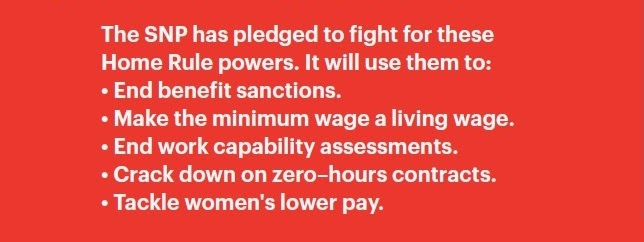
This massive base of people we have in our movement is a tectonic plate in society. As we have seen from 'The Vow' when this plate shifts, even empires teeter. Imagine if this plate could move as readily on something that didn't immediately cost the enemy quite as much as its own annihilation? If it could move for living wage powers? If it could move for land reform? If it could move for welfare justice powers to end foodbanks? If it could move for job creating powers? If it could move for a YES movement victory in 2015? If we can do even some of that, we will have turned hope into demonstrated power, levelled the political landscape, and left the forces of reaction living in fear of more earthquakes. It's comin yet for aw that.
==============================================
WANT TRAINED IN SOCIAL MOVEMENT ORGANISING?
==============================================
YES in the community is committed to providing training in social movement organising for YES groups and activists on a cost basis.
Our lead organiser previously worked for London Citizens as a professional community organiser. Our team includes several former and current trade union organisers, as well as decades of years of explicitly social movement activist and leadership experience.
Our trainings are 4 hours or 16 hours in length, and suitable for any active participant in the movement. They consist of elaboration of concepts, roleplay, and real world planning. Issue based organising, styles of 121 conversations, mapping, pushing and power analysis are the main themes that we focus on, altho there is scope in 16 hour sessions to discuss the differences in methodology between the Organising model, the Alinskyist model and the Freireist models of leadership development in social movement organising and where these connect with marketing, behavioural and people management techniques widely used in the private and third sector. All trainings come with course notes, and we commit to extending advice and support on an ongoing basis.
If you would like to book a session please get in touch below. Ideally we don't want people paying more than a fiver, as this is about engagement, so we recommend you get at least 5 people coming for a 4 hour session, and at least people 20 coming for a 16 hour/weekend session.
4 hours (£30 + travel + any room hire)
16 hours (£120 + travel + any room hire)
Facebook: http://on.fb.me/1yF3SpG | Phone: 07904553200 | Twitter: @PowerCIC